
Hands are different from every other food-contact surface in a processing plant, they cannot be dismantled for cleaning, and they move. An operator may pass between raw intake, processing, packing, waste areas and ablutions throughout a shift, creating opportunities for contamination to move with them. Effective hand hygiene in food processing is therefore not a personal-hygiene footnote. It is a process control that deserves the same discipline as cleaning and sanitation elsewhere in the facility.
Hand Hygiene in Food Processing Targets Transient Contamination
Skin microorganisms are traditionally described as resident and transient flora. Resident organisms live on and within the skin and are harder to remove. Transient organisms are picked up from surfaces, products and objects people touch and are more readily transferred onwards.
For food facilities, transient contamination is the main operational concern and can include organisms of food-safety concern such as Listeria monocytogenes and Enterobacteriaceae. Hands may pick up microorganisms together with protein, fat, blood, sugars, starches or other product residues. This soil can shield microorganisms and reduce the effectiveness of sanitiser applied directly to dirty hands.
Washing Is a Removal Step
Handwashing is primarily a removal process. Soap or an approved handwash helps loosen and emulsify soil and suspend microorganisms so they can be rinsed away.
Mechanical action is essential. Around 20 seconds of rubbing, with attention to fingertips, thumbs, between the fingers and around the nails, is more effective than passive lathering.
The same Sinner Circle principle applies: chemistry, temperature, mechanical action and contact time work together. Product alone cannot compensate for poor technique.
Why Sanitiser Cannot Replace Washing
Alcohol-based hand sanitisers can rapidly reduce many microorganisms on clean hands, but do not remove dirt, grease or product residue. Their effectiveness can also be reduced when hands are visibly soiled or greasy.
This is why sequence matters. Wash to remove soil and reduce the transient microbial load, rinse thoroughly, dry the hands, then apply the sanitiser according to the site procedure. Drying is important because excess water can interfere with the intended concentration of an alcohol-based product.
Where an approved antimicrobial handwash is used, it adds antimicrobial action during washing. It does not replace the sanitising stage where the facility’s validated procedure requires both.
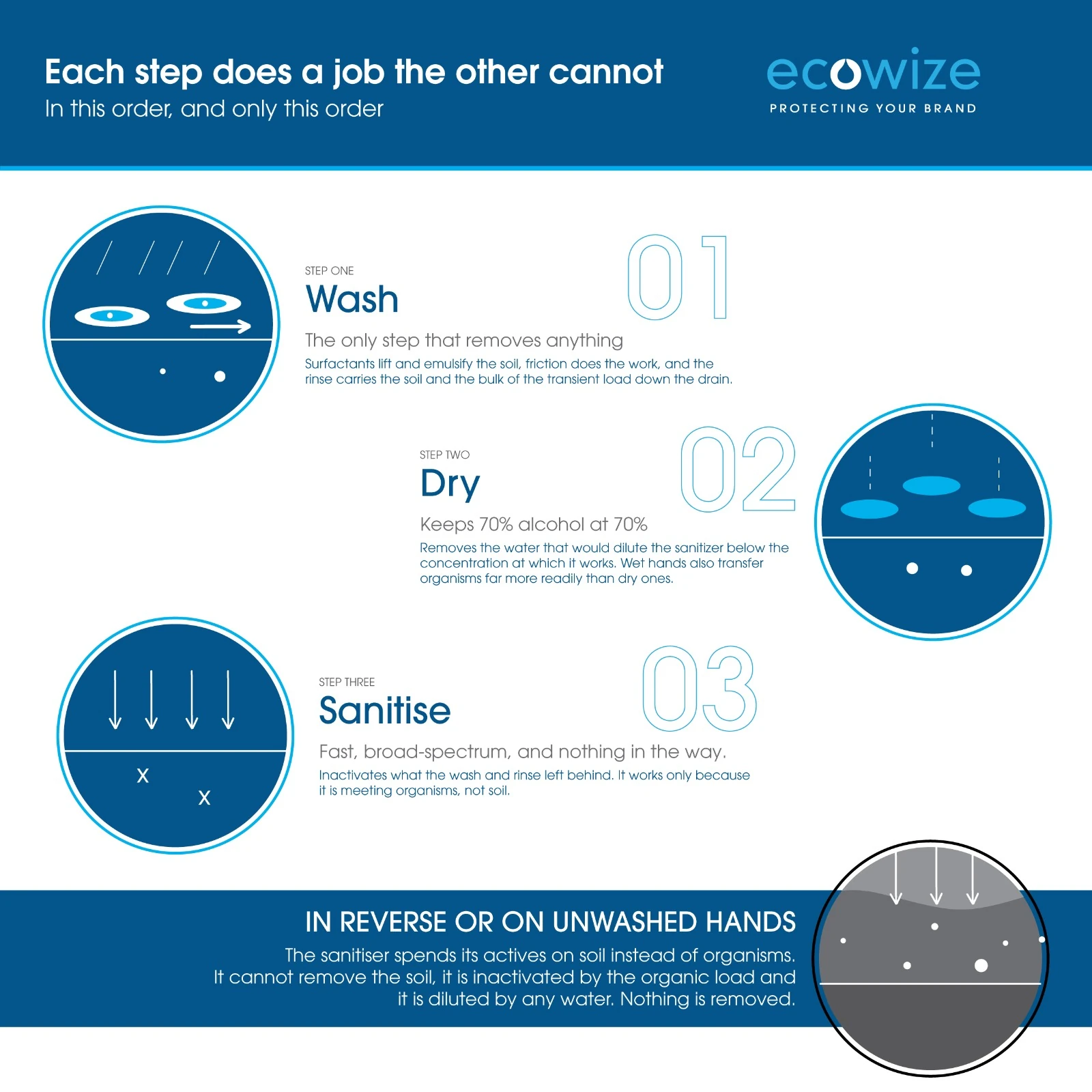
The Same Logic Applies to Production Equipment
No food facility would apply disinfectant to a soiled conveyor and regard it as properly cleaned. Soil is removed first so that the disinfectant can contact the surface effectively.
Hand hygiene in food processing follows the same logic. Applying sanitiser to unwashed hands asks the active ingredient to work through soil instead of directly against microorganisms.
This matters where employees move between zones, handle raw materials or touch shared equipment, doors and controls.
Hand Hygiene Must Be Built Into the Food Safety System
Effective hand hygiene depends on more than a basin and product. Facilities need clear procedures covering when hands must be washed, correct technique, drying, sanitising and what employees should do when water, dispensers or drying facilities are unavailable.
South Africa’s R638 regulations establish general hygiene requirements for food premises, while HACCP-based systems require contamination risks to be identified and controlled. Hand hygiene should be reinforced through training, supervision and verification.
Wash, Dry and Sanitise in the Right Order
Each step has a different purpose. Washing removes soil and much of the transient contamination. Drying prepares the hands for the next step. Sanitising provides an additional microbial reduction on already clean hands.
Ecowize applies this process-control thinking across hygiene programmes: remove contamination first, then apply the appropriate antimicrobial control under the correct conditions.
When hand hygiene in food processing is treated as part of the sanitation system, it becomes easier to train, verify and improve.
Contact Ecowize to review your current specialised cleaning requirements and align them with audit expectations.
Frequently Asked Questions
Why should hands be washed before sanitising?
Washing removes soil, grease and product residue that can reduce sanitiser effectiveness and shield microorganisms.
How long should food handlers wash their hands?
Hands should be rubbed thoroughly for around 20 seconds, including fingertips, thumbs, between fingers and nail areas.
Can hand sanitiser replace handwashing?
No. Sanitiser does not remove visible soil or grease. Washing and drying should come before sanitising.
Why must hands be dry before sanitiser is applied?
Excess water can dilute an alcohol-based sanitiser and interfere with effective use.
Is hand hygiene part of food safety control?
Yes. Hand hygiene helps control contamination transfer and should form part of documented hygiene procedures, training and verification.