
Controlled hygiene solutions for environments where moisture-based cleaning is essential.
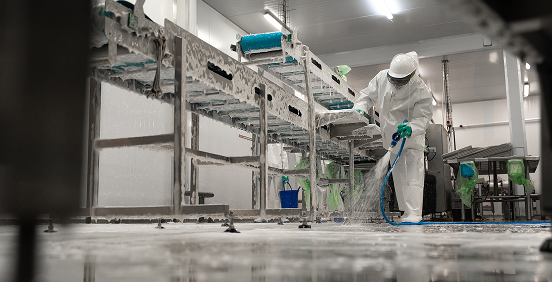
Wet cleaning programmes are designed to support food safety management systems certified to FSSC 22000 and other GFSI-recognised schemes. Through effective prerequisite programme implementation, contamination control and verified sanitation practices, cleaning activities contribute to compliance, audit readiness and consistent food safety performance. Wet cleaning specialists help high-risk operations maintain hygienic food-contact surfaces and a controlled production environment.
Wet cleaning is a structured cleaning process that uses water, specialised chemicals and controlled application methods to remove organic matter, fats, proteins and microbiological contamination from surfaces and equipment. It is critical in environments where heavy soiling and high bacterial loads are present, particularly in protein processing facilities. Approved cleaning chemicals are selected, diluted and applied according to validated procedures to ensure effective cleaning while protecting food contact surfaces.
Wet cleaning specialists are needed across a range of high-risk food production areas, including abattoirs and meat processing facilities, poultry operations, fish and seafood processing, dairy production environments, ready-to-eat and high-care areas, and food manufacturing plants with heavy organic load. These environments require controlled cleaning methods that support both hygiene outcomes and production continuity.
The work follows a structured, compliant cleaning methodology aligned with global food safety standards.
Gross debris is removed and the cleaning area is set up.
Manual or system-driven cleaning helps ensure effective soil removal.
Cleaning effectiveness is verified through visual inspections, hygiene monitoring and microbiological testing, where applicable.
Specialised detergents and foaming agents are used to break down fats and proteins.
Controlled rinsing is followed by the application of approved sanitisers.
Wet cleaning programmes are developed to support HACCP requirements, ISO 22000 food safety standards, SANS 10049 hygiene management systems and FSSC 22000-aligned food safety programmes. The process is designed to be effective, consistent, measurable and aligned to audit expectations. Particular focus is placed on food-contact surfaces where inadequate cleaning can directly impact product safety and quality.
Particular attention is given to preventing cross-contamination between raw and finished product areas, especially in high-care and ready-to-eat environments. Wet cleaning also supports allergen management programmes by assisting with the removal of allergen residues during product changeovers.
Wet cleaning affects food safety and contamination control, product quality and shelf life, operational efficiency and downtime, and audit outcomes and compliance performance. In high-risk environments, the cleaning process directly influences the stability of the operation. When cleaning is controlled properly, it helps reduce risk across the wider production system.
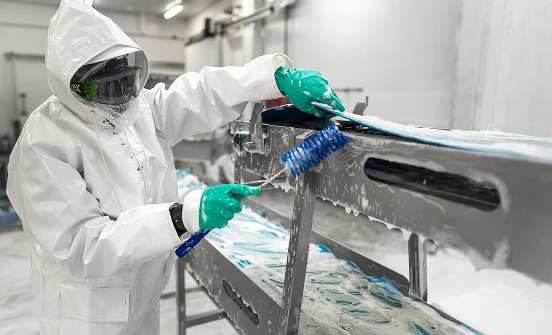
Ecowize brings proven expertise in complex food production environments, tailored cleaning programmes aligned to the specific operation, and an integrated approach combining people, processes and systems. The focus remains on safety for both personnel and product, with partnership-driven service delivery built on trust and shared purpose.
Wet cleaning is not just about hygiene. It supports food safety, contamination control, product quality, operational efficiency and audit performance. The service goes beyond cleaning to help protect brand integrity and operational goals.
Wet cleaning specialists help remove organic matter, fats, proteins and microbiological contamination through a controlled and verifiable process. In high-risk food environments, that level of control is essential. When the method is structured properly, it supports product integrity, compliance and audit readiness. Contact Ecowize to learn more about tailored wet cleaning solutions.