Condensation control in food facilities is a defined hygiene requirement under SANS 10049 and HACCP. The objective is to prevent water droplets forming above open product and food contact surfaces, verify that moisture is removed before production resumes, and keep auditable records of inspections and corrective actions.
In South Africa’s varied climates, uncontrolled moisture creates pathways for contamination, undermines audit performance and increases operational risk. Treating condensation as part of the Food Safety Management System, rather than as ad hoc housekeeping, is the difference between repeat findings and reliable compliance.
Food safety, hygiene and operational risk
Condensation provides the moisture that many microorganisms need to persist. In chilled or high-humidity zones, droplets that form on ceilings, beams, ducting or equipment can fall into exposed product or onto food contact areas.
This route bypasses routine surface cleaning and elevates risk from organisms such as Listeria monocytogenes. The outcome is not only a microbiological concern but an audit exposure. Visible droplets, stained ceiling panels or makeshift wiping practices signal inadequate control.
Effective programmes define where condensation is likely to form, how it will be removed in a controlled way, and what evidence will show the area is safe to return to service.
What standards expect and how to demonstrate it
Standards require sites to identify environmental hygiene hazards and establish preventive measures with verification. For condensation, this means scheduled inspections of high-risk overheads, validated tools for safe removal, and documented sign-off before production.
Procedures should name the responsible person for each zone, specify the inspection frequency by risk and temperature regime, and set acceptance criteria such as no visible droplets above open product lines. Records must capture date, time, zone, finding, action taken, tool used and release signature.
During certification or retailer audits, inspectors will look for the protocol, the logs and the evidence that corrections are timely and effective.
Practical controls that work on the floor
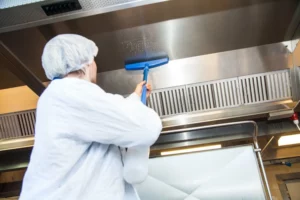 Reliable control blends engineering and hygiene actions. Temperature differentials should be minimised by maintaining insulation, sealing vapour barriers and balancing airflow so warm air does not meet cold surfaces. In busy chill rooms and blast areas, door discipline, air curtains and scheduled defrost cycles reduce moisture load.
From a sanitation perspective, improvised wiping with cloths or paper is not acceptable because it spreads contamination and leaves residues behind. Use a purpose-designed condensation squeegee with a smooth, non-absorbent head and securely fixed, replaceable blades so water is removed cleanly without fibre shed; an angled profile helps guide runoff away from open lines for safe collection and disposal. Colour-coded options support zone segregation so tools do not migrate between low-risk and high-risk areas.
Where height is an issue, select fixed or extendable handles to reach services without ladders, improving both hygiene and operator safety. After removal, apply an approved food-contact sanitiser at the label dilution and contact time, then verify that surfaces are dry and free of residues before start-up.
Verification and records that withstand audit
Verification closes the loop and proves control. Environmental patrols should be logged against a numbered ceiling or services map so trends can be seen across seasons.
In high-risk areas, add temperature and relative humidity readings, or a simple dew-point check, to explain why events occurred and to guide preventive maintenance. Release of an area after moisture removal should include a visual clean check for overheads, confirmation that exposed surfaces below were re-sanitised, and a signature by an authorised person.
Recurrent events in the same location should trigger root-cause analysis, for example repairing damaged insulation, redirecting airflow, fitting drip trays or changing process timing to reduce humidity spikes. Choosing tools with non-absorbent surfaces and replaceable blades helps maintain consistent results over time, which simplifies verification and shortens audits.
Safety, equipment and infrastructure
Condensation is also a safety issue under the Occupational Health and Safety Act. Water on floors creates slip hazards and can lead to injuries and lost time.
Over time, moisture accelerates corrosion, supports mould growth and compromises electrical systems and sensors, shortening the life of equipment and raising unplanned maintenance costs.A documented condensation control programme protects people and assets, reduces downtime and lowers total cost of ownership by keeping structures dry and stable.
Putting condensation control into the Food Safety Management System
Embed the programme as a prerequisite procedure that sits alongside cleaning and environmental hygiene. Define zones, tools, inspection frequency and acceptance criteria. Train staff to recognise early signs of moisture build-up, use condensation squeegees correctly, re-sanitise affected surfaces and complete the release log.
Management review should consider trends in events, root causes and corrective actions, with engineering and hygiene teams coordinating on long-term fixes. This approach turns a common occurrence into a controlled process that supports strong audit outcomes.
Conclusion
Ecowize South Africa, understands where condensation prevention and care fit within the ten steps of cleaning and why it matters for audit-ready performance. Our teams apply this daily, supported by the right systems, training and verification.
With specialised brushware and purpose-designed condensation tools, we make control simpler, safer and more consistent. That is how we help food facilities manage moisture, reduce risk and protect both compliance and product integrity.
If you would like a practical, site-specific programme that is easy to run on the floor and credible at audit, contact Ecowize